Pick up where the AI left off
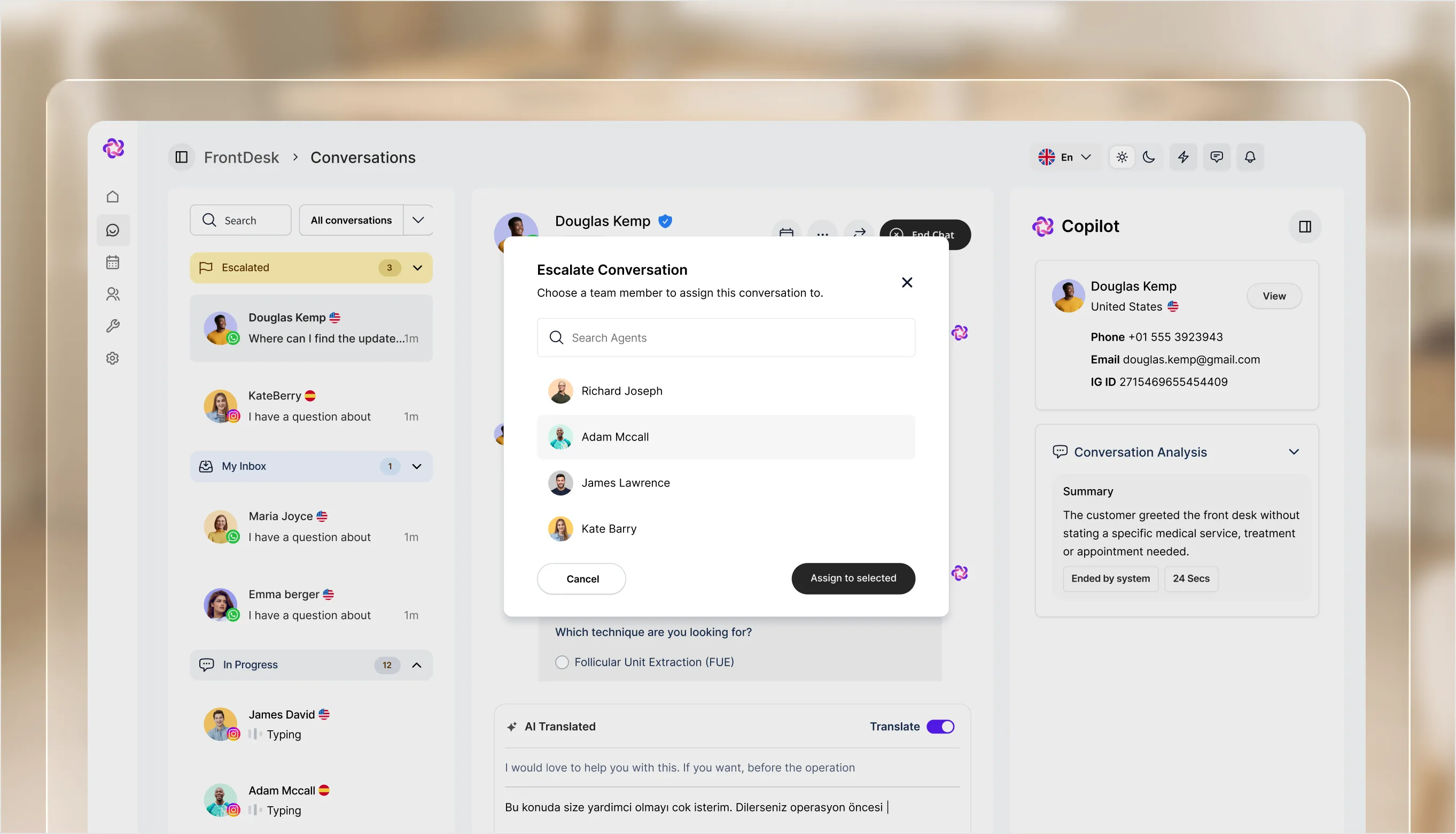
The full transcript, the customer record, and the detected intent are on screen before your agent types a word.

When a conversation needs a person it arrives with the transcript, the contact record, and the detected intent already attached. Your agent replies, resolves, and marks it won or lost.
Connect your web chat & social account in under 3 minutes.
What it does
Escalation is a handover, not a restart. The customer keeps talking in the same window and your agent picks up with everything already in front of them.
The full transcript, the customer record, and the detected intent are on screen before your agent types a word.
Your agent answers from Fellix and it lands on WhatsApp, Instagram, Messenger, or web chat, in the same thread.
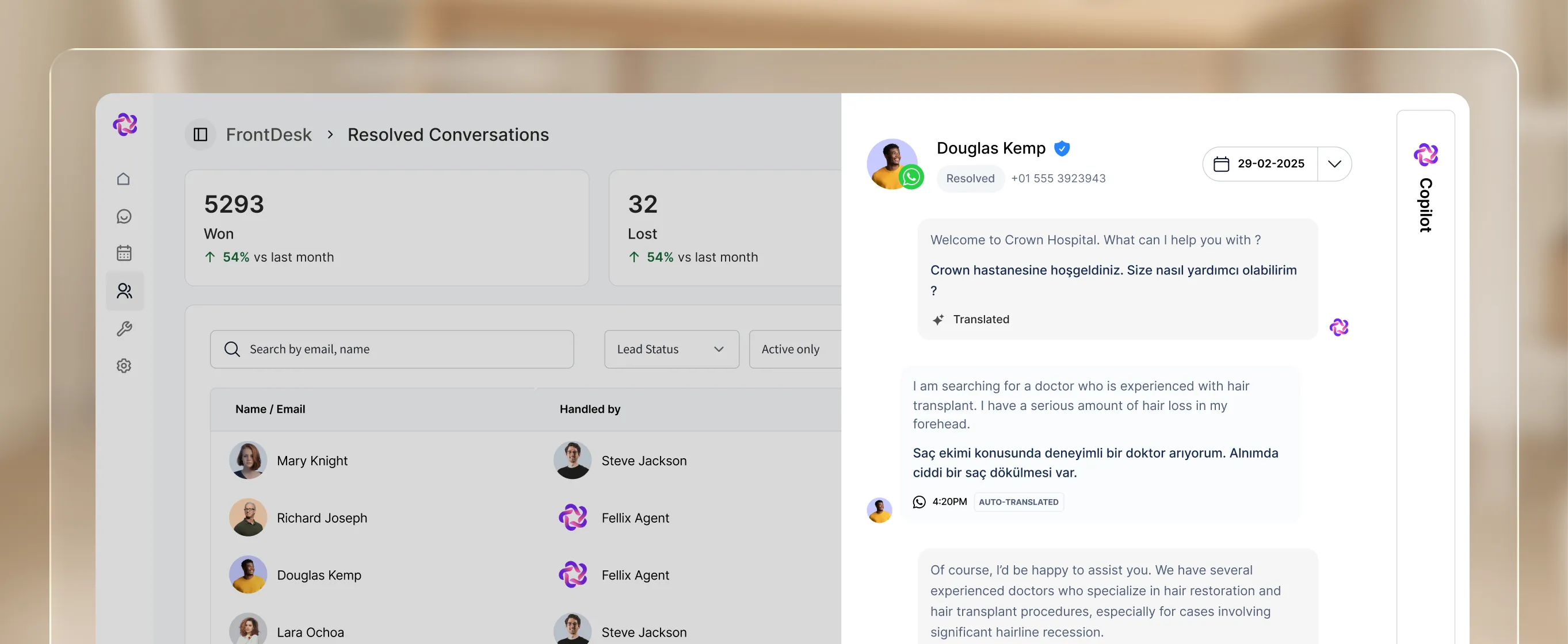
Every conversation ends as won or lost, so the pipeline reflects what actually happened rather than what someone remembered.
In the product
The console keeps the queue, the customer, and the outcome in one place, so finishing a conversation takes one screen rather than four.
Conversations route to the team that owns that channel, so nobody picks through a shared pile.
Past conversations, previous intents, and earlier outcomes sit beside the live thread.
Losses carry a reason, which is what makes the pipeline analytics worth reading.
Where it pays off
P / 1
The transcript travels with the escalation, so your agent opens with an answer instead of an apology.
P / 2
Every conversation closes as won or lost, and the pipeline view reports win rate, days to win, and the reasons behind losses.
P / 3
Conversations are assigned by team and channel, so ownership is unambiguous from the moment it escalates.
Stack comparison
Integrations
Fellix reads and writes to your CRM, storefront, calendar and helpdesk — so every conversation starts with real customer context, and every outcome lands back in the stack your team already works in.


Built to work together